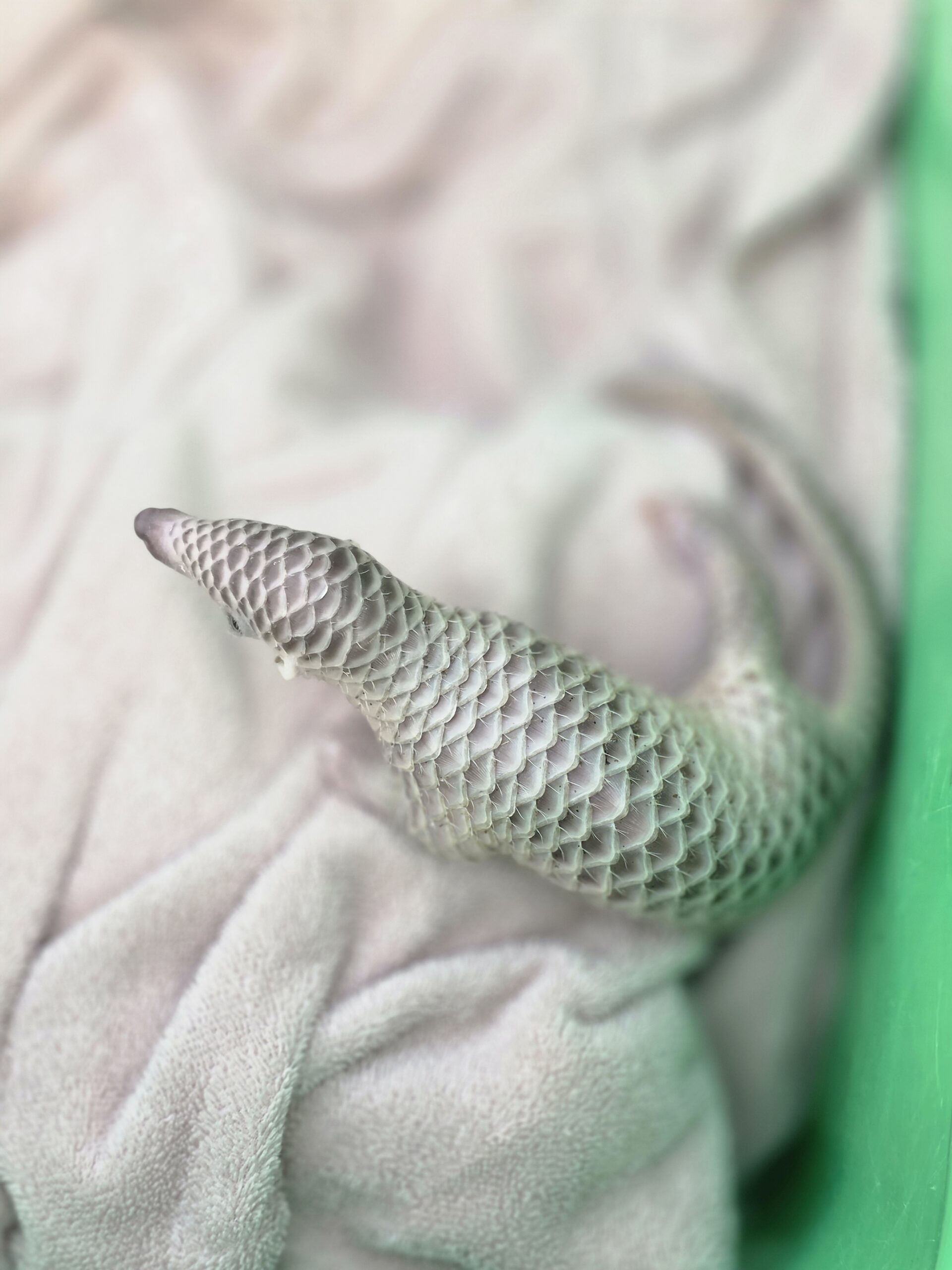
So today is sadly my last day on the project. I could stay a little longer, but the heat will climb further over the weekend, and I am getting too attached to both the human and non-human animals. I spent the morning with the bears, and the afternoon I went ‘upstairs’ for the last time. Gruelling in the heat.
The centre naturally concentrates it’s volunteer staff on the largest numbers of species: crocodiles, bears, deer and primates, but they will house, rehabilitate and release ( if possible) any species native to Laos. I want to wrap up with a few of these very special animals that this team of amazing humans care for as individuals.
This bird, a Lesser Adjunct, was brought to the centre after someone attempted to shoot it. It has shrapnel in its brain still, is blind in one eye, hobbles around, but is alive and doing well.

Another bird, a Hornbill, was bought in, eventually released, but as it constantly returns to the centre, they now feed it daily. As enrichment, it is tasked to find its food inside an egg box. This is too easy for such a clever bird, which can, once a piece of dragon fruit is in its beak, expertly peel away the red, leathery skin, dispose of it, and eat the succulent, sweet flesh.
Theeeee cutest baby Muntjac, recovered only this week from a street market 14 hours south of here (and as the centre’s owner reminded, an incredibly selfless task, when you consider there is no fuel in the country). It is now being fed every 4 hours by the team here. When I research the range of these cute animals, yes, I am reminded that they are found all across South East Asia, oh and one far flung little island in the Northern Hemisphere, err, is it called the UK?


The centre also houses several critically endangered Yellow-headed Temple Turtles, and also Elongated Tortoises, which they are successfully breeding.

There are 3 crows, 3 Civets, a Porcupine all fed in the centre, but I never saw these.
And a very special new addition to the ‘miraculous medley’ of animals, a baby pangolin ( main picture). This feisty little character has already escaped from its box once and got lost amongst the book cases in the clinic. I don’t know about you, but I dont think I had heard about such a strange creature until the pandemic, and now it is the most trafficked animals in the world. The WWF estimate that over 1 million pangolins have been trafficked in the last 10 year period, prized for their meat, and their scales used in Chinese Medicine and also made in to leather products in the US and Mexico.
Do you want to buy a pangolin? Isn’t it great to know that you can! It’s not quite as simple as scrolling, ordering tonight, and Amazon delivering by 9am tomorrow, but not much more difficult. If you were to browse the Internet now, you could buy a pangolin ( yes, really), and my guess is that it wouldn’t take you more than an hour. A pangolin is poached every 3 minutes to meet online demand.
Comments
One response to “Miraculous Medley”
Pangolins are incredible so cruel that they get trafficked