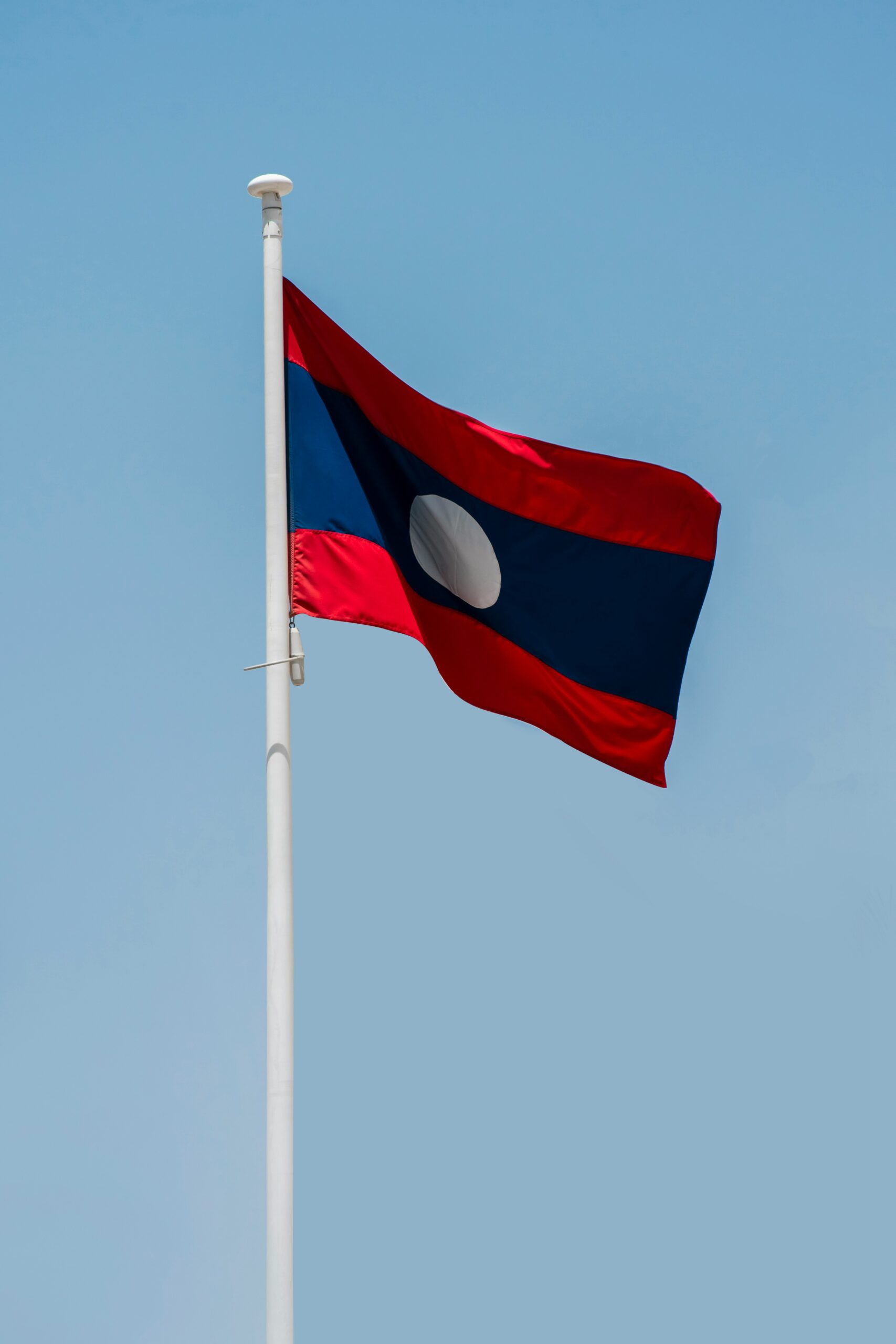
I don’t know about the rest of you, but when I visit a new country, I like to have a mental picture beforehand: what is the population, how much land they inhabit, whether it’s cities or rural areas, the geography, their economy, their religion, and their politics. Is this a bit of imperialist thinking? I then read around for interesting stories, leaving the history for the long plane journey and transit airports. So, by the time I reach my destination, I can speak fluent Lao (yeh, yeh!) and will know just enough not to embarrass myself in local company.
So here goes. Firstly, and most interestingly, Laos is the same size as the UK (lightbulb moment) but with a population of 7.4 million compared to our 69.5 million. Sixty-three per cent of the Lao people live in rural areas, whereas we are at 16%. Comparing capital cities: Vientiane has a population of 775,000 people, and London has 9.8 million (the magical Istanbul has a whopping 16 million). They have a Communist government, are mostly practising Buddhists, and they have a (nominal) GDP per capita of 2250 USD, whereas the UK is at 50,000 USD (I like to remind us Brits how privileged many of us are). The country’s primary export is electricity (hydro), selling to its close neighbours, followed by mining (copper, gold, and rubber), and then agriculture, employing three-quarters of the population.
Interesting facts? Well, the most fascinating one for me is that Laos is the most bombed country in the world (apparently). Over a nine-year period, from 1964 to 1973, the US, in an effort to disrupt the supply lines going into Vietnam, dropped two million tonnes of ordnance onto Laos. To put this into perspective, this was more than they dropped on Germany and Japan combined in WW2, with a frightening 30% left undetonated. It was called the ‘secret war’ because information was withheld from the American public and Congress at the time. It reveals that wars are never just “12-day wars” but continue long after. Fifty years after the last bombing sortie in the ‘secret war’ still 30% of the country remains contaminated, limiting agricultural development and killing an additional 20,000 people. Only cities and tourist sites have been properly cleared.
I also marvel at the Mekong River. At 4900 km long, it is the longest in South East Asia. Originating in the Tibetan Plateau and spilling into the South China Sea near Ho Chi Minh City in Vietnam, it is a mighty river. With an average width of 1.5km, it is home to 4000 islands in Laos alone. Like the Nile through Egypt, the river must be vital to life in Laos, as evidenced by 68% of the country’s population living on its floodplains. The other 80% of the land is densely forested mountains
Last interesting fact, for now: Laos has 5000 Buddhist temples and 22,000 monks living in them. I love that fiery saffron colour of their Kasaya robes, symbolising the flames of Buddha and representing the highest perfection. I look forward to seeing that vibrancy. Only in Asia.

Comments
2 responses to “Country File : Laos”
Their Buddhism presumably is a big part of their desire to protect nature?
Let’s see if this still stronger than the making of a fast buck!