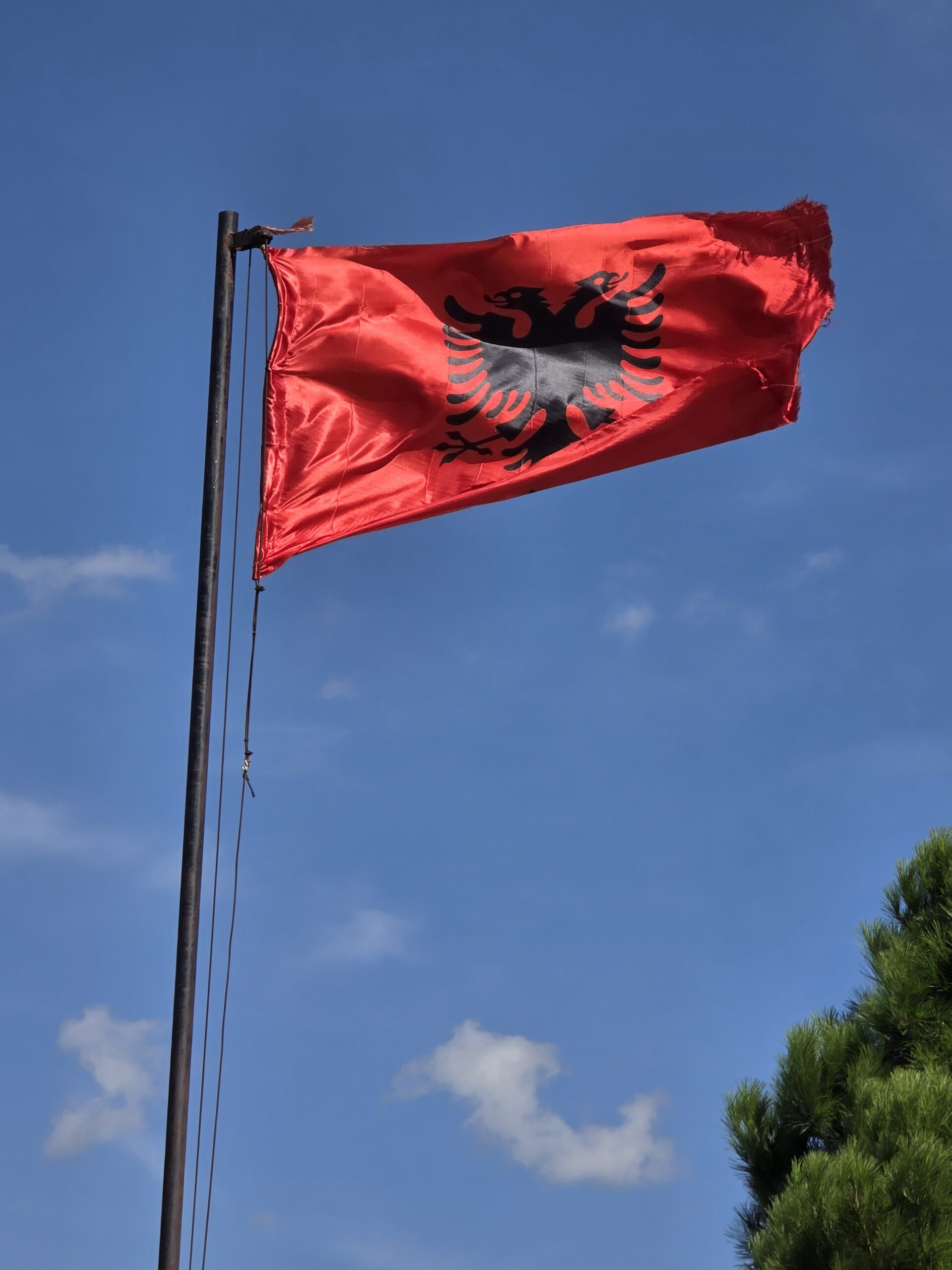
When you are born in an island nation it is hard to imagine your small strip of land invaded and possessed so many times, even in recent history. Yet this is the story of Albania. Firstly, the Greeks occupied, then the Romans, the Byzantines for 1000 years, the Slavs and the Ottoman Turks in the mid-14th century. It wasn’t until 1912 that Albania gained some form of independence from the Ottoman state, but a treaty that left 40% of ethnic Albanians living outside their country. Albania was only formally recognised as a sovereign state in 1920 following WW1. When, after a 6-month flirtation with democracy, the country elected Ahmet Zogu in 1924. He would be a 27 year old Prime Minister and serve for 2 years, President for 3 years and then finally King Zog 1 (there was never a Zog 2) for 11 years. Although Zog (was this his intergalactic name?) pulled the nation out of poverty and famine, he had dictatorial powers, restricted freedoms and thousands more Albanians emigrated. Now to WW2: the Italians invaded Albania in 1939 to be replaced by the German occupation from 1943 to 1944.
What was to follow was a critical time in Albania’s history with the election of Enver Hoxha in 1944, a revolutionary communist who had set up the Albanian Communist Party in 1941 as a reaction to Mussolinis fascist influence on the country. Hoxha, once in power, abolished the Monarchy and set up a one party communist state. Another ‘wolf but just in different clothing’ Hoxha similarly made gains in poverty and literacy but his opponents were sent to labour camps and some executed, all travel abroad was banned and all places of worship closed. He left Albania as the poorest, most isolated country in Europe.
It was Hoxha’s death in 1985 that bought Ramiz Alia to lead the communist party and country and the first time the country looked West for investment. As the wall came down in Berlin in 1989, signaling the fall of Communism in Europe, pressure inside the country led to the lifting of the travel ban ( allowing a further exodus of Albanians to leave) lifted the religious ban and embrace of the free market. By 1990, close to economic collapse and social unrest it was agreed that new political parties could be formed and recognised.
Finally, in 1992 Albania elected it’s first democratically elected leader in 70 years, Sali Berisha. A figure of much controversy even today, accused of nepotism and corruption, he nevertheless made profound changes to the country, as Prime Minister over his two terms and still as leader of the opposition today is an important figure.
All this history, despite its small size. Albania is a country 210 miles long and 95 miles wide making it just a bit larger than Wales. Three quarters of the land is mountainous with the 9000-foot Mount Korab in the north ( Snowdon in Wales is 3560 ft) and a low fertile plain to the sea stretching 125 miles and 30 miles wide where most of its 2.7 million population live. Albania is said to be the most homogenous country in Europe with 90% identifying as Ethnic Albanians, the balance Greeks, Macedonians and Vlachs ( an ethnic group of Greeks). It is thought that a further 5 million Albanians live outside the country. Interesting, when Turkey alone say they have a population of 5 to 6 million people with Albanian ancestry. The 2023 Albanian census named 50% Muslims, 15% Christian, 14% undeclared, 3.5% atheist. 21% of the population is involved in agriculture, 28% in industry ( footwear, apparel, tourism). After decades of 3 figure inflation and cripplingly low GDP, 2025 will see a 3.8% GDP growth and 1.9% inflation. The envy of most countries in Europe.

Tourism took off in Albania in the early 2000’s. Promoting its unspoilt Meditteranean beaches, mountain landscape, wild interior, archaeological sites (UNESCO has 5 entries), traditional cuisine, low prices and hospitable people. The Raddison, Marriot and Hyatt groups have already built hotels drawn by a 10-year corporation tax repreive. And it is newly reported that Ivanka Trump and Jared Kushner have bought Sazan, Albania’s largest island, for more than 1 billion USD to develop the island for ‘ultra rich tourism’. This year, 2025, the 2.7 million Albanians are expected to host over 10 million tourists. Albania joined NATO in 2009 and EU membership is pending. I am just wondering what will happen when the 5 million diaspora realise what they are missing and return home?!
The message is clear to me. Visit now! I am expecting to see beautiful scenery, their complex history out there ‘on show’, a proud people following old traditions, yet a vibrant optimistic urban youth. How are they handling this speed of change and particularly the influx of tourists? Friends have asked about corruption and criminality in Albania. Well, I suppose not every Brit is a football hooligan nor drunk at the airport by 9 o’clock in the morning.
Comments
4 responses to “Country File : Albania”
Sooo interesting. All I’ve ever know from this country is Footwear factories.
Pics online look amazing.
Looking forward to our face to face catch up
Safe travels 💙💙💙
Thanks Denise, as always for your support
Love this history synopse!! Can not wait to hear more on the journey!
Yes it’s brilliant, like a potted history of Albania for anyone short on time. It’s all in there!