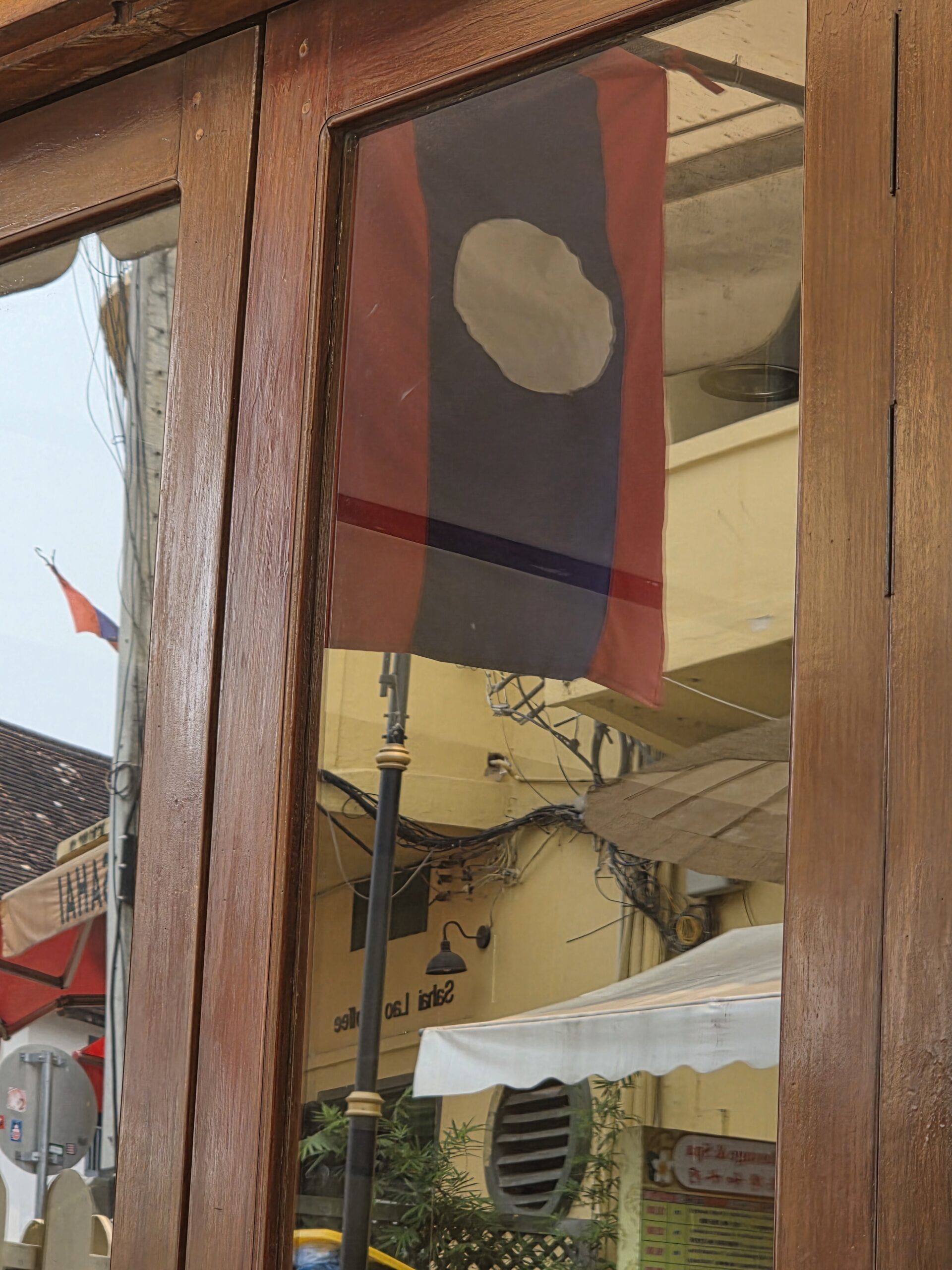
I fly home today.
I have had an incredible time here in Laos. I have met some amazing people and animals. All places that I visited were so interesting, and the whole experience was, above all else, educational.
Throughout the trip, I have tried to keep a positive outlook, but the truth is, behind the scenes, I have been deeply troubled. So much so that this is version six of the blog post I started writing two weeks ago to calm my troubled mind. I have no wish to hurt the country or its chances of success, but at the same time, I know people will ask me whether they should visit, and then I would have to reveal what I have seen. In truth, I see a country that has been… ‘ravaged’. This was the only word that kept repeating in my head over the days I have driven along it, trained through it and flown over it. I need to explain this. Noting that this is only MY experience, from the areas that I have visited, and I would be the happiest woman alive if I am wrong.
I need to return to the image of a land with paddy fields and towering karst mountains cloaked in tropical rainforest ( last picture below). Supported by the Visit Lao website’s strapline ” Laos – untouched nature”.

Pretty early on, I felt there was something not right here. No green paddy fields (none); everywhere so much drier than I imagined (and remembered from the past in this area); forest areas looking sparse, areas of deforestation and fields of slash-and-burn. Initially, I was pacified by talk of ‘dont worry it’s just the end of the dry season’. ‘It will be different as soon as it rains’, but now I know differently.
I believe I have witnessed a country that climate scientists would describe as ‘at a tipping point’. A country close to the collapse of its ecosystem. This is a first for me. For those that want to read on I will explain.
Firstly, Laos, like all countries, is suffering from the underlying effects of climate change: Less rainfall and rising temperatures. Today it is 39 degrees here in Vientiane, and 3 weeks ago they had a hailstorm of cricket-ball-sized ice particles that shattered car windows.
Several other events could hasten this collapse. Firstly, the Chinese (hereafter referred to as the NN, Northern Neighbour – a superpower; it could be any) has dammed the Mekong further upstream, reducing the water levels flowing south. This makes me think about the choke point of the Straits of Hormuz, and how there are many others.
At the same time, Laos has dammed several tributaries of the Mekong to sell hydroelectric power to the NN. Hydropower is Laos’s biggest export. So, reducing water flows means limited paddy fields, limited agriculture, and a drier atmosphere, which leads to troubled forests.
Then, post-pandemic, the Lao Government has deforested vast tracts of land, selling them to their NN to plant bananas and durians ( the human dead flesh smelling fruit) which can now be quickly taken to market, before the fruit over-ripens, via the newly built rail link. People in the know report that this process has not been well regulated, and National forest land has also been sold.

Local people too, are converting their land over to mononoculture crops by slashing and burning. A practise previously permitted by the Government, but purportedly banned in 2026 with pollution concerns. I saw many burns ( see pic below).

With so much land being slashed and burnt in the areas to the west of the country, where I was with elephants, the air pollution in this Laos province had been reported, alongside Delhi, as having the highest pollution levels in the world for a week in March. A double whammy for the ecosystem: limited water and choking air.
The Lao Government has made international promises to increase forest cover back to its 2020 level of 70 per cent, but I can stake my flight ticket home that this is not true. The 2023 global forest report ranked Laos among the top 10 world offenders in 2023, with a 47 per cent increase in loss from 2022. It also compared Laos to Brazil, the biggest offender in total trees lost, but only because of its vast size. In relative terms, Laos is losing trees 5 times faster than Brazil.
The photographs I have put here in the post were carefully chosen, maybe akin to an agricultural scene in the UK, but the reality is far more dystopian, and these are images I keep locked away in my camera. Acres and acres of burnt-out trees, whole tracts of ploughed-up red, soiled land, enormous abandoned NN transport trucks, half-built petrol stations, dust, dust, dust, dirt, children breathing in truck fumes and dust particles by the roadside, and just heaps of garbage. Any vegetation on the verges is dust- and soot-covered.


There is no place here for animals, and maybe soon, no place for humans either.
This was my other early observation. No animals or birds….anywhere. But then no habitat. Only a trip to the early morning market in Luang Prabang revealed where the animal kingdom had disappeared to. It has always been legal for the Lao people to eat from the forest, and, as a small population and vibrant forest, this was most likely sustainable. But these foodstuffs are now being sold to the Northern neighbour arriving by train. It was all there in the market: insects, frogs, bats, fish, rats, birds (some in small wicker cages, see below). Snakes and reptiles were squeezed into bottles of alcohol to make them more ‘potent’. Again, I felt like I was witnessing something unsustainable. How could you ever release bears into this environment? Poachers would not be the issue, there is nothing for them to eat!

Adding ‘insult to injury’, Laos makes so little economic gain from the visitors from the north. Chinese-owned trains and roads bring tourists to Chinese-owned hotels, who eat on Chinese-owned Mekong River boats, escorted by Chinese guides. The hydroelectric power stations are owned by the Chinese. The monocultural banana plantations are Chinese-owned and managed. Proceeds for all go back to China, or via Laos to China, to serve the debt.
Then finally, as we chug along the Mekong in beautiful silence, heading north to see the caves near Luang Prabang, I see a mechanical digger on the riverbank with a massive promotional sign above a temporary metal jetty. Beyond, a vast, flat piece of land has been cleared of all trees and vegetation, but I can’t properly see it from my position. Google reveals though that this is to be the Luang Prabang Smart City Project (visionary pictures below). Chinese-owned, probably Chinese-built, and I am guessing Chinese-occupied. My heart sank in to deeper despair. This beautiful country.


As you know, these days, Hong Kong is referred to as Hong Kong SAR China. (SAR, a special administrative region). Laos SAR China coming soon.
Maybe all this is progress? There is an argument for this….but, frankly, I don’t buy it.

Comments
3 responses to “Reflections: Laos”
😞❤️🤐
Not good at all 😞
Toooo sorry to report this, yes! But still had a brilliant time x